Other Electronic Components-Related Industry

Leading Electronic Components Manufacturer
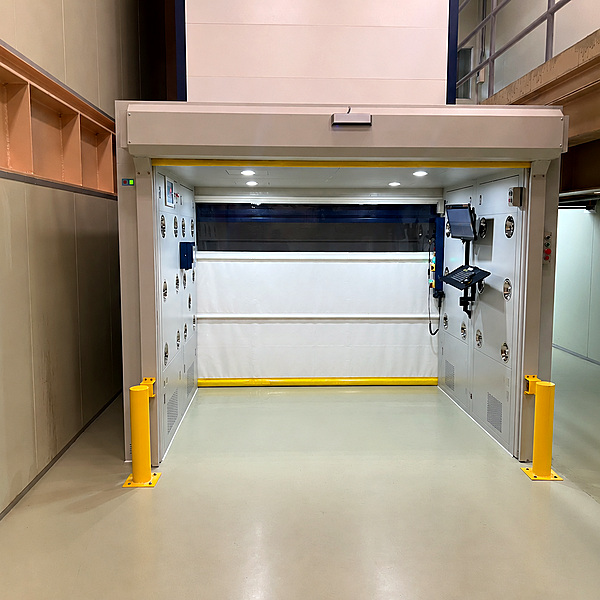
Line-side Warehouse
Features
Large 6-Meter Automated Storage System Integrating Cross-Floor Line-side Logistics
Manual Inbound and Outbound Operations on 1F, Unmanned Logistics in the 2F Cleanroom
Upgraded Cleanroom Grade to Meet Process Environment Requirements
Dual Inbound/Outbound Port Design to Optimize Cross-Floor Storage and Retrieval Flow
LED Display Guidance to Reduce Manual Storage and Retrieval Errors
20 Storage Trays with a Single-Tray Load Capacity of 300 kg
Integrated with the Customer’s WMS to Support Automated Outbound Operations
Gripping Mechanism and AGV Delivery for Unmanned Logistics
Vertical Storage Design to Improve Warehouse Space Efficiency
Reduces Labor Requirements and Improves Production Line Efficiency

Description

This project is an automated storage system implementation case for the line-side warehouse of a leading electronic components manufacturer. The equipment specification is a large 6-meter system with a single-load capacity of 300 kg. It is mainly used for cross-floor material storage, cleanroom material supply, and unmanned logistics delivery management.

Based on the customer’s on-site conditions, JY STE Technology planned an integrated smart warehousing solution connecting the 1F general environment with the 2F cleanroom operation area. Through dual inbound/outbound ports, an air shower, LED guidance, integration with the customer’s WMS, a gripping mechanism, a lifting platform, and AGV delivery processes, the solution helps improve issues such as manual cross-floor material retrieval, frequent gowning and degowning for cleanroom access, difficulty in managing traditional iron racks, and insufficient logistics efficiency.

After implementation, materials can be stored from the 1F side and automatically retrieved from the 2F cleanroom side before being delivered to production equipment. This upgrades line-side warehouse management toward automation, intelligence, unmanned operation, energy saving, and carbon reduction, further improving process efficiency and production line material supply stability.

Added to Inquiry list.
 
 
ELECTRONIC COMPONENTS CLEANROOM CASE STUDY

Leading Electronic Components Manufacturer | Production-Line Storage Automation
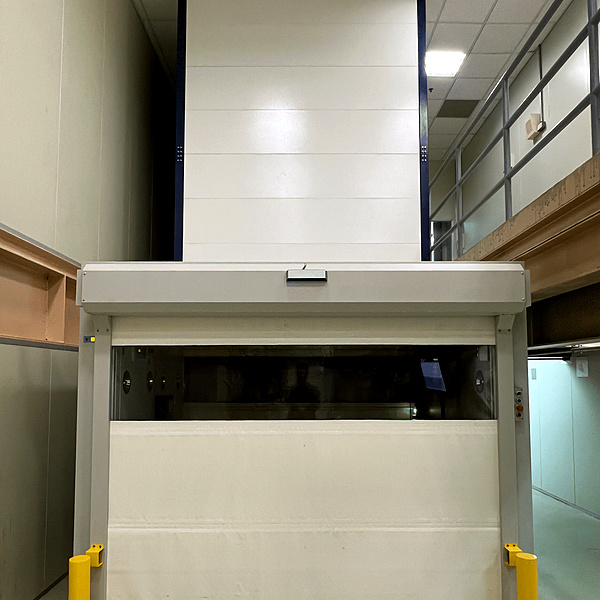
Large 6 m, 300 kg Cross-Floor Smart Storage Case Study

This case study covers the implementation of an automated production-line storage system for a leading electronic components manufacturer with more than 50 years of experience in intelligent and green-energy technologies. The project integrates a general operating area on the first floor with a cleanroom production area on the second floor. A large 6 m automated storage system with a 300 kg load capacity, dual access openings, air-shower doors, LED position guidance, client-side WMS integration, a gripping mechanism, a lifting platform, and unmanned vehicle delivery was introduced to resolve inefficient cross-floor material handling, time-consuming cleanroom access, difficult conventional rack management, and labor-intensive logistics. The result is an automated, intelligent, and unmanned line-side material supply model.

6 m
Smart Storage System Height
300kg
Load Capacity per Tray
20 Trays
Internal Storage Trays
AGV / AMR
Automatic Delivery to Production Lines
PROJECT OVERVIEW

PROJECT OVERVIEW

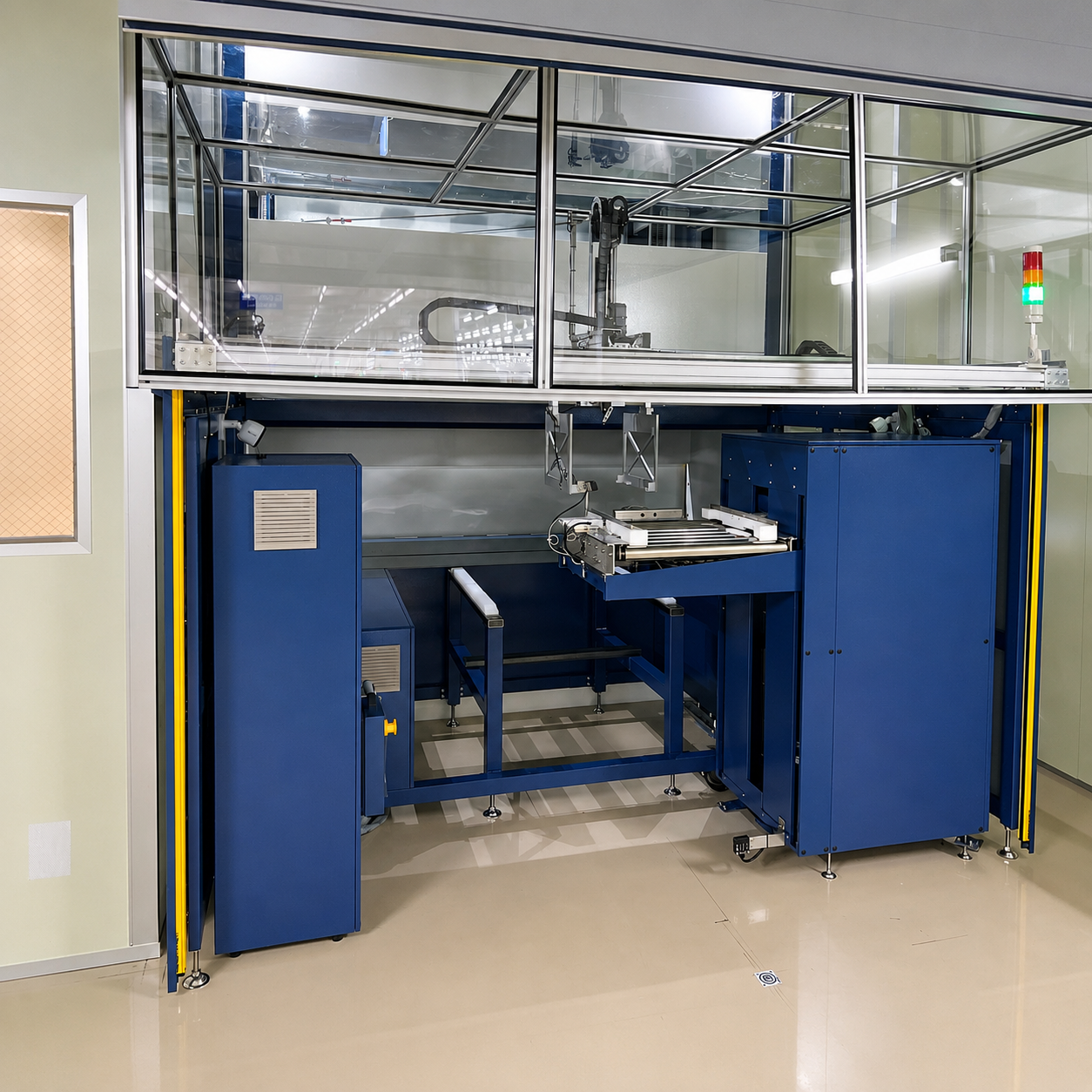
The project integrates a general operating area on the first floor and a cleanroom production area on the second floor within one large 6 m smart storage system. The first floor supports manual inbound and outbound operations, while the second floor connects directly to cleanroom production-line supply. The system contains 20 storage trays, each with a 300 kg load capacity. Air-shower doors were added to the first-floor access openings so that materials are purified before entering the storage system from the general environment. On the second floor, once the client-side WMS issues a command, the designated tray is automatically moved to the output station. A gripping mechanism, material lifting platform, powered rollers, push rods, and a double-deck unmanned vehicle then complete automatic retrieval and production-line delivery with minimal human intervention.

Industry
Electronic Components Manufacturing
Application
Line-Side Storage / Cleanroom Supply
System Specification
Large 6 m System
Core Integration
WMS + AGV / AMR Delivery

1. Company Background: Intelligent Technology, Green Energy, and Sustainable Manufacturing

This leading electronic components manufacturer has operated for more than 50 years and has consistently invested in intelligent and green-energy technologies as part of its sustainability strategy. At the end of 2024, the company announced that it had been recognized among Taiwan’s Best Global Brands for the 14th consecutive year and remained one of Taiwan’s top ten international brands.

The smart storage project directly supports the company’s operating mission of environmental protection, energy conservation, and care for the planet. From the early planning stage, JunYao Technology applied the capabilities of smart storage to integrate the cleanroom and general operating environments, enabling material storage, cross-floor logistics, and production-line supply to operate with higher efficiency, lower labor requirements, and less operational disruption.

After implementation, materials can be stored through the first-floor station and automatically retrieved and delivered to production equipment from the second-floor cleanroom. This upgrades line-side storage toward automation, intelligent management, unmanned operation, energy savings, and carbon reduction.

2. Project Architecture: Cross-Floor Smart Storage Integrating Cleanroom and General Environments

The storage system uses a cross-floor configuration. The first floor is a general operating area for manual inbound and outbound handling, while the second floor is a cleanroom area connected to production-line supply and unmanned logistics. JunYao Technology installed two opposing access openings between the first and second floors and upgraded the internal components and sheet-metal structure to cleanroom standards, allowing the automated storage system to support both general logistics and cleanroom material supply.

01

1F General-Area Inbound and Outbound Operations

The first floor supports manual inbound and outbound handling. Barcode scanning, LED position guidance, and air-shower doors provide material identification, placement guidance, and purification before storage.

02

2F Automated Cleanroom Retrieval

The second floor connects directly to the cleanroom. After receiving a command from the client-side WMS, the system automatically moves the designated tray to the output station.

03

Unmanned Material Delivery

The gripping mechanism, lifting platform, powered rollers, push rods, and double-deck unmanned vehicle work together to deliver materials automatically to production equipment.

BEFORE / AFTER

Key Differences Before and After Implementation

The operation was upgraded from manual cross-floor retrieval, repeated cleanroom garment changes, and conventional rack management to cross-floor smart storage and unmanned material delivery.

Before | Manual Cross-Floor Logistics and Conventional Rack Management

Before implementation, materials were stored on the first floor while production was located on the second floor. Operators frequently moved between floors, repeatedly changed into and out of cleanroom garments, and passed through air showers. The process was complex and time-consuming.

  • Materials were stored on the first floor while production was located on the second floor, requiring frequent cross-floor movement.
  • Entering and leaving the cleanroom required changing cleanroom garments and passing through an air shower, making the process complex and time-consuming.
  • Conventional rack storage made materials difficult to access and increased the risk of picking errors.
  • Material information was not updated in real time, affecting production efficiency.
  • Conventional storage occupied substantial floor space and provided poor space utilization.
  • Manual logistics caused wasted labor hours and high labor costs.
  • The operation lacked automated and intelligent management mechanisms.

After | Cross-Floor Smart Storage + AGV / AMR Delivery

After implementation, the smart storage system vertically integrates the first- and second-floor logistics routes. Cleanroom-grade construction, air-shower doors, LED guidance, WMS integration, and unmanned vehicle delivery automate the process from inbound storage to production-line supply.

  • Cross-floor smart storage vertically integrates the first- and second-floor logistics routes.
  • The storage system was upgraded to cleanroom standards, reducing contamination risks.
  • Air-shower doors at the first-floor access openings purify materials before they enter storage.
  • Operators no longer need to change cleanroom garments frequently, significantly simplifying the workflow.
  • LED displays indicate the correct material position and reduce storage and retrieval errors.
  • The client-side WMS issues commands and the storage system automatically moves the designated tray.
  • The gripping mechanism, lifting platform, and double-deck unmanned vehicle complete automatic material delivery.
  • Vertical storage improves space utilization and significantly reduces the required floor area.

3. Management Challenges Before Smart Storage Implementation

01

Time-Consuming Cross-Floor Material Retrieval

Materials were stored on the first floor while production was located on the second floor, requiring operators to move frequently between floors and increasing retrieval time and workload.

02

Complex Cleanroom Entry and Exit Procedures

Operators had to change into and out of cleanroom garments and pass through an air shower whenever entering or leaving the cleanroom, with each round trip taking tens of minutes.

03

Difficult Conventional Rack Management

Conventional rack storage made materials inconvenient to access and increased the likelihood of picking errors and delayed information updates.

04

Low Storage Space Utilization

Conventional storage occupied substantial floor space and did not make effective use of the building height.

05

Inefficient Manual Logistics

Production personnel spent significant time on material preparation and logistics, resulting in wasted labor hours, high labor costs, and reduced production capacity.

4. Solution: Large 6 m, 300 kg Cross-Floor Smart Storage System

Based on the customer’s site conditions, JunYao Technology designed a large 6 m smart storage system with a 300 kg tray load capacity, integrating the first-floor general environment and the second-floor cleanroom into a cross-floor logistics architecture. The system contains 20 storage trays, each rated for 300 kg. Air-shower doors were installed at the first-floor access openings, while LED displays guide operators to the correct placement position. On the second floor, commands from the client-side WMS coordinate the storage system, gripping mechanism, material lifting platform, powered rollers, push rods, and double-deck unmanned vehicle to complete automatic retrieval and production-line delivery.

Opposing Cross-Floor Access Openings

Two opposing access openings connect the first and second floors, vertically integrating the general environment with the cleanroom production area.

Cleanroom-Grade Upgrade and Air-Shower Doors

The internal components and sheet-metal structure were upgraded to cleanroom standards, and air-shower doors were added at the first-floor access openings to reduce contamination risks.

LED Guidance and Barcode Operations

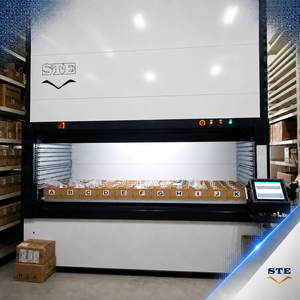
After an operator scans the barcode on the first floor, the LED display indicates the correct material position, reducing storage errors.

WMS Integration and AGV / AMR Delivery

Commands from the client-side WMS coordinate the storage system, gripping mechanism, lifting platform, and unmanned vehicle to complete automatic delivery.

5. Smart Storage Inbound, Outbound, and Unmanned Logistics Workflow

01

1F Barcode-Based Inbound Operation

At the first-floor access station, the operator scans the barcode. The LED display indicates the correct material position, and the operator places the material accordingly.

02

Automatic Storage

After placement is completed, the system automatically stores the material, streamlining inbound operations and reducing errors.

03

2F WMS-Controlled Automatic Retrieval

After the client-side WMS issues a retrieval command, the system moves the tray containing the designated material to the second-floor output station.

04

Material Transfer by Gripping Mechanism

The gripping mechanism transfers the material from the tray to the material lifting platform, connecting the storage system with the downstream unmanned logistics process.

05

Lifting Platform and Powered Roller Transfer

The lifting platform uses powered rollers and push rods to position the material accurately inside the client’s double-deck unmanned vehicle.

06

Unmanned Delivery to Production Lines

After receiving the material, the unmanned vehicle automatically delivers it to the production equipment. No manual intervention is required, improving delivery efficiency.

6. Improvements After Smart Storage Implementation

Higher Cross-Floor Logistics Efficiency

Vertical integration of the first- and second-floor logistics routes reduces the time operators spend moving between floors.

Fewer Cleanroom Garment Changes

Smart storage and unmanned vehicle integration reduces the need for personnel to enter and leave the cleanroom frequently, simplifying the workflow.

Fewer Storage and Retrieval Errors

Barcode operations combined with LED position guidance reduce human errors during storage and retrieval.

Improved Storage Space Utilization

The large 6 m smart storage system uses vertical storage to stack materials upward, improving space utilization and reducing the required floor area.

Lower Labor Requirements

Automatic retrieval and delivery through smart storage and unmanned vehicles reduce manual logistics requirements and allow personnel to focus on higher-value production tasks.

Intelligent Management and Unmanned Operations

Integration of the WMS, gripping mechanism, lifting platform, and unmanned vehicles creates a highly automated storage and logistics model.

 
CLEANROOM SMART STORAGE VALUE

7. A New Benchmark for Unmanned Line-Side Material Supply

This project is more than the installation of a single automated storage system. It integrates the cleanroom environment, general operating area, cross-floor logistics, WMS commands, gripping mechanism, lifting platform, and unmanned vehicle delivery into one complete smart logistics system. The solution optimizes storage and logistics operations while advancing energy conservation, carbon reduction, intelligent management, and unmanned operation. This large 6 m, 300 kg cross-floor smart storage solution establishes a new benchmark for future smart storage and automated warehousing applications in the electronic components industry.

Cross-Floor Integration

Vertically integrates the first-floor general environment with the second-floor cleanroom logistics route.

Cleanroom Material Supply

Air-shower doors and cleanroom-grade construction reduce contamination risks when materials enter the production area.

Unmanned Delivery

The WMS, gripping mechanism, lifting platform, and unmanned vehicle work together to complete unmanned production-line delivery.

BENEFITS

Implementation Benefits

Higher Logistics Efficiency

Cross-floor storage integration connects the first- and second-floor logistics routes, reducing operator travel and waiting time.

Fewer Operational Errors

Barcode operations and LED guidance reduce placement errors and improve inbound and outbound accuracy.

Improved Space Utilization

The large 6 m smart storage system uses vertical storage to improve space utilization and reduce floor-space requirements.

Unmanned Production-Line Delivery

WMS-integrated unmanned vehicle delivery reduces labor requirements and improves material-supply efficiency.

Applicable Industries and Operating Environments

Electronic Components Manufacturing Cleanroom Line-Side Storage Cross-Floor Automated Storage Large 6 m Automated Storage 300 kg Tray Load Capacity WMS System Integration AGV / AMR Delivery Unmanned Logistics Management
JYSTE SMART STORAGE SOLUTION

Planning a Cross-Floor Cleanroom Smart Storage and Unmanned Logistics System?

JunYao Technology provides automated storage, smart storage, and unmanned line-side material supply solutions based on building configuration, cleanroom requirements, material dimensions, tray load capacity, WMS integration, gripping mechanisms, lifting platforms, and AGV / AMR delivery requirements.

Contact Apex Equipment | www.jyste.tw
TOP