Construction Engineering

Taichung Building Materials Company

Parts Warehouse
Features
Large 4-Meter Automated Storage System to Improve Parts Warehouse Management Efficiency
Full Use of the 4.5-Meter Site Height to Improve Space Efficiency
Automatic Height Detection Function for Flexible Storage Location Allocation
Storage Location Allocation Function to Improve Parts Storage Efficiency
WMS System Management to Reduce Inventory Discrepancies
Goods-to-Person Operation Mode to Shorten Material Search Time
Reduces Manual Material Search Costs and Improves Operational Stability
Direct Communication with the Original Manufacturer to Preserve Flexibility for Future Smart Upgrades

Description

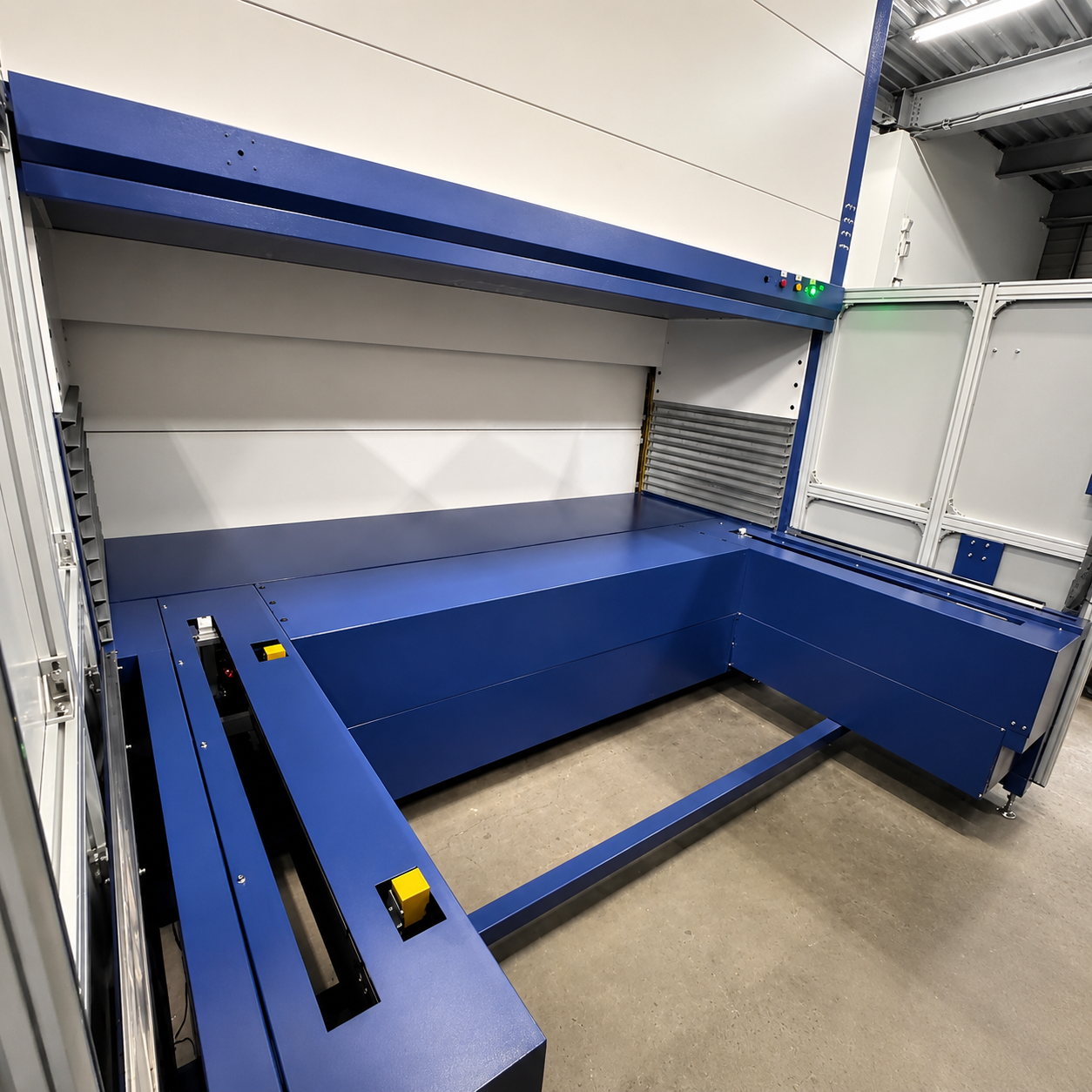
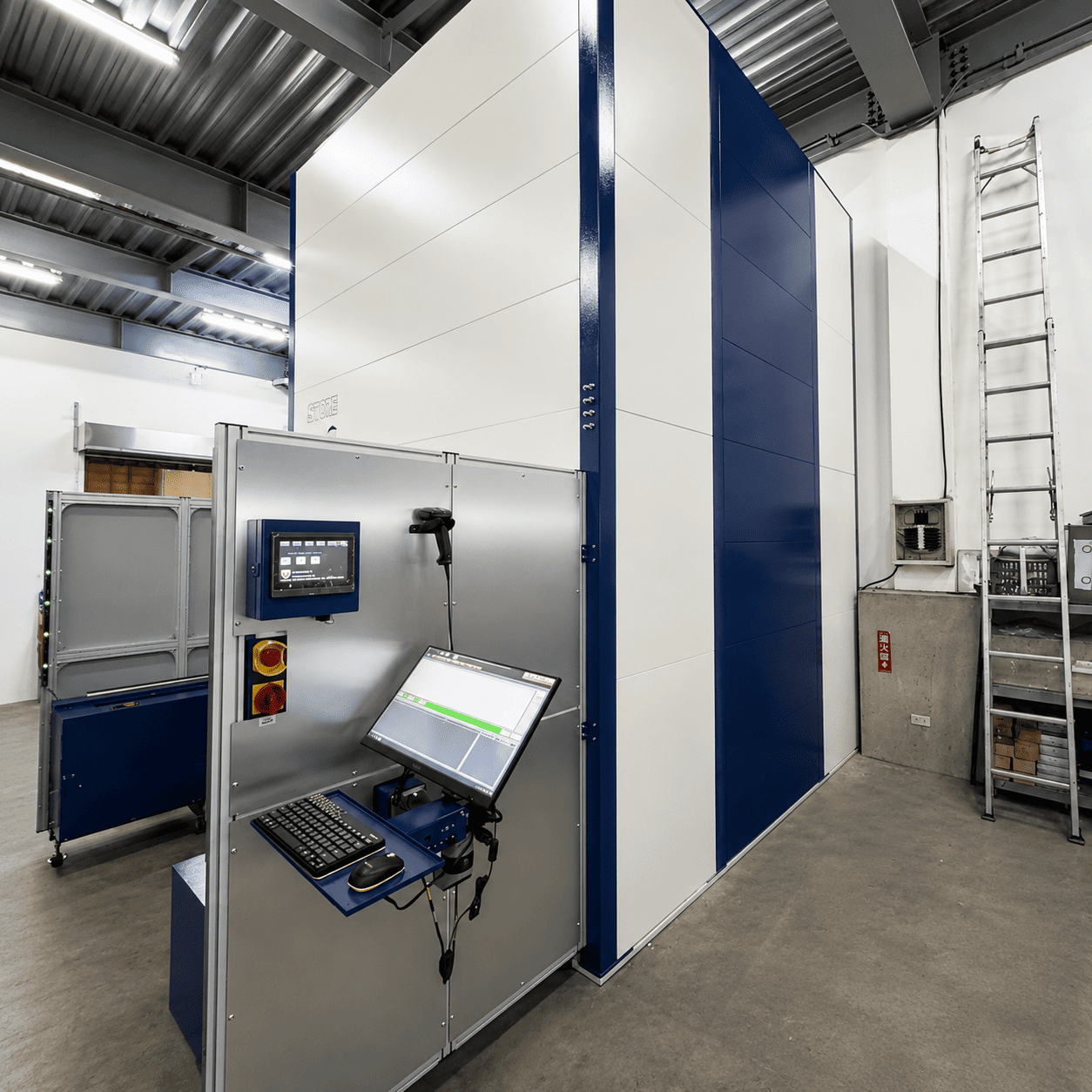
This project features the implementation of an automated storage system for the parts warehouse of a building materials company in Taichung. The system is a large 4-meter model with a single-load capacity of 300 kg, designed for centralized parts storage, inbound/outbound management, and inventory record control.

Before the upgrade, the customer used conventional fixed racks for parts storage. Because storage heights were fixed, space was often used inefficiently. In addition, manual inbound and outbound recordkeeping frequently led to inventory discrepancies, while the time required for personnel to locate materials was difficult to control, further increasing operational costs.

Based on the site’s 4.5-meter height condition, JY STE Technology introduced a large vertical smart storage system to improve the customer’s parts warehouse management.

After implementation, parts can be managed through automatic height detection, storage location allocation, the WMS system, and a goods-to-person workflow. The solution improves space utilization and inventory accuracy while making the parts retrieval process faster, more stable, and more intelligent.
Added to Inquiry list.
 
 
BUILDING MATERIALS PARTS STORAGE CASE STUDY

Building Materials Company in Taichung | Spare Parts Warehouse
Large 4 m, 300 kg Automated Storage Case Study

This case study covers the implementation of an automated storage system for the spare parts warehouse of a building materials company in Taichung. The client wanted to improve space utilization and inventory record accuracy while establishing a foundation for future intelligent warehouse management. JunYao Technology designed a large 4 m, 300 kg vertical smart storage system for the available 4.5 m facility height. Automatic height measurement, dynamic storage allocation, WMS inventory control, and a goods-to-person workflow improved parts management efficiency, reduced inventory discrepancies, and lowered the hidden cost of manual material searching.

4 m
Automated Storage Height
300kg
Load Capacity
4.5 m
Available Facility Height
Parts Management
Application Requirement
PROJECT OVERVIEW

Project Overview

The client originally managed spare parts with traditional fixed shelving. Because shelf heights could not be adjusted to match different material dimensions, vertical space was underutilized and storage capacity was wasted. Manual control of inbound and outbound records also created inventory discrepancies and additional management costs. After implementing the large 4 m, 300 kg vertical smart storage system, automatic height measurement, dynamic storage allocation, WMS control, and a goods-to-person workflow increased storage capacity, improved inventory accuracy, and accelerated parts retrieval.

Client
Building Materials Company in Taichung
Application Area
Spare Parts Warehouse
Equipment Specification
Large 4 m
Load Capacity
300kg

1. Project Background: From Automation to Intelligent Parts Management

During the initial visit, the client explained that they wanted to use automated storage to improve space utilization and inventory record management. During the pre-contract discussions, the client further stated that the future solution should go beyond automation and support intelligent warehouse management.

After fully understanding the client's expectations and operational constraints, JunYao Technology proposed a clearly defined large 4 m, 300 kg vertical smart storage solution based on the 4.5 m facility height, parts management requirements, inventory control issues, and material retrieval costs.

The completed system eliminated the space waste associated with fixed shelving. By combining WMS control with a goods-to-person workflow, the client upgraded parts management from manual, experience-based handling to a more systematic and intelligent operating model.

BEFORE / AFTER

Key Differences Before and After Implementation

The warehouse was upgraded from fixed shelving and manual inventory control to automatic height measurement, dynamic storage allocation, WMS management, and goods-to-person operation.

Before | Traditional Fixed-Shelving Parts Warehouse

Before implementation, the factory used traditional fixed shelving. Storage heights could not be adjusted to match different part dimensions, and manually controlled inventory records were prone to discrepancies.

  • Fixed shelving provided no height flexibility
  • Storage positions could not be adjusted for different material sizes
  • Vertical space was underutilized, resulting in wasted storage capacity
  • Manual inbound and outbound control increased inventory discrepancies
  • Record discrepancies created management and cost issues
  • Material searching time could not be accurately controlled
  • Extended search time increased hidden operating costs

After | Large 4 m Smart Parts Warehouse

After implementing the vertical smart storage system, automatic height measurement and dynamic storage allocation adjusted tray spacing according to material height, while the WMS accurately controlled inventory records and outbound processes.

  • Automatic height measurement determines suitable storage conditions
  • Dynamic storage allocation optimizes tray spacing and reduces cubic-space waste
  • Overall storage capacity was significantly increased
  • The equipment height was matched to the facility to maximize vertical space
  • The WMS systematically manages inbound and outbound inventory data
  • Accurate Inventory Visibility
  • Operators only need to submit a retrieval request for the required goods to arrive accurately at the access point
  • A goods-to-person workflow is fully implemented

2. Management Challenges Before Implementation

01

Space Waste Caused by Fixed Shelving

Traditional fixed shelving had fixed storage heights that could not be adjusted to match different part dimensions, preventing effective use of vertical space.

02

Manual Inventory Records Created Discrepancies

Inbound and outbound records were controlled manually, making discrepancies more likely and creating additional management and cost issues.

03

Material Retrieval Time Was Difficult to Control

Material retrieval time could not be accurately controlled, and accumulated search time increased the company's hidden operating costs.

3. Solution: Large 4 m, 300 kg Vertical Smart Storage System

JunYao Technology designed a large 4 m, 300 kg vertical smart storage system for the spare parts warehouse and the available 4.5 m facility height. Automatic height measurement and dynamic storage allocation adjust tray spacing according to material height, reducing cubic-space waste and increasing storage capacity. The standard WMS manages inbound and outbound inventory data, while operators can retrieve required goods through a simple request, enabling an efficient goods-to-person workflow.

Automatic Height Measurement

The system detects material height and determines suitable storage conditions, allowing storage positions to match actual part dimensions and reduce wasted space.

Dynamic Storage Allocation

The system assigns storage positions according to material conditions and optimizes tray spacing to increase storage density and overall capacity.

WMS Inventory Management

The standard WMS controls inbound and outbound data and provides accurate inventory visibility.

Goods-to-Person Workflow

Operators submit a simple retrieval request, and the required goods are delivered accurately to the access point, reducing search time.

4. Improvements After Implementation

Increased Storage Capacity

Automatic height measurement and dynamic storage allocation reduced cubic-space waste and significantly increased total storage capacity.

Maximized Vertical Space

The large 4 m automated storage system was selected to make effective use of the available 4.5 m facility height.

Accurate Inventory Visibility

The WMS manages inbound and outbound inventory data, reduces discrepancies, and improves parts management accuracy.

Reduced Hidden Retrieval Costs

The goods-to-person workflow delivers required materials accurately, reducing manual search time and associated hidden costs.

Foundation for Intelligent Management

Integrating automated storage with the WMS gives the spare parts warehouse a practical foundation for intelligent management.

5. Why the Client Chose JunYao Technology

When evaluating the automated storage solution, the client considered not only equipment functions but also communication efficiency and after-sales service. As the original equipment manufacturer, JunYao Technology can respond directly without relying on multiple layers of communication through an agent. The equipment also uses commercially available components rather than proprietary special-order parts, allowing the client to source replacements independently and manage future maintenance costs more effectively.

01

Direct and Efficient Communication

As the original equipment manufacturer, JunYao can respond to technical questions directly without routing requests through an agent.

02

Practical After-Sales Support

The equipment uses commercially available components rather than proprietary special-order parts, simplifying future sourcing and maintenance.

03

A Clearly Defined Solution

After understanding the client's requirements and constraints, JunYao provided a clear plan addressing space utilization, inventory accuracy, and retrieval efficiency.

 
PARTS SMART STORAGE VALUE

6. Upgrading the Parts Warehouse from Traditional Shelving to Smart Management

After implementing the large 4 m, 300 kg automated storage system, the client's parts warehouse no longer relies solely on traditional shelving and manual experience. Automatic height measurement, dynamic storage allocation, WMS inventory management, and goods-to-person operation improved space utilization and storage capacity while making material retrieval more accurate and predictable. This project demonstrates the practical value of upgrading a traditional industrial parts warehouse from automation to intelligent management.

Automatic Height Measurement

Storage positions are optimized according to material height to reduce wasted space.

WMS Management

Inbound and outbound data are systemized for accurate inventory visibility.

Goods-to-Person

After a retrieval request is submitted, the required materials are delivered accurately to the operating position.

BENEFITS

Summary of Implementation Benefits

Improved Space Utilization

A large 4 m automated storage system was planned for the available 4.5 m facility height, reducing space waste associated with traditional shelving.

Improved Inventory Accuracy

The WMS manages inbound and outbound data and reduces discrepancies caused by manual recordkeeping.

Reduced Material Retrieval Costs

The goods-to-person retrieval model delivers materials accurately and reduces manual search time.

Supports Intelligent Upgrades

Combining automated storage with a WMS gives the parts warehouse a foundation for intelligent management.

Suitable Industries and Applications

Building Materials Industry Spare Parts Warehouse Large 4 m Automated Storage 300 kg Load-Capacity Storage Automatic Height Measurement Dynamic Storage Allocation WMS Inventory Management Goods-to-Person Workflow
JY STE SMART STORAGE SOLUTION

Need to Improve Space Utilization and Inventory Accuracy in Your Parts Warehouse?

JunYao Technology provides integrated automated storage, smart warehousing, and parts management solutions based on material dimensions, load requirements, facility height, inventory control, retrieval workflow, and intelligent management needs.

Contact Apex Equipment | www.jyste.tw
TOP