0
0



- Home
- PROJECT PERFORMANCE
- Construction Engineering
- Taichung Building Materials Company – Phase II


Construction Engineering
Taichung Building Materials Company – Phase II
- Features
- Phase II implementation of a large 4-meter automated storage system, extending the benefits achieved in Phase I
- Load capacity per tray upgraded to 500 kg, improving storage flexibility for heavy items
- Full utilization of the 4.5-meter site height to improve space efficiency
- Automatic height detection to reduce wasted storage space
- Storage location allocation to improve parts management efficiency
- WMS-based inventory record management to reduce discrepancies between system records and physical inventory
- Goods-to-Person workflow to shorten material retrieval time
- High-load trays and automated equipment transfer to overcome limitations in storing heavy items at elevated levels
- Phase I experience applied to Phase II planning, improving communication and implementation efficiency
- Original manufacturer service support to enhance the stability of long-term cooperation
Description
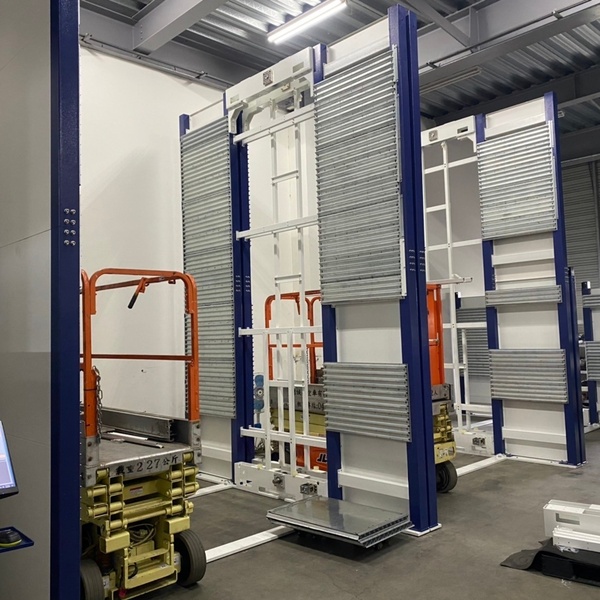
This project is a Phase II automated storage system implementation case for the parts warehouse of a building materials company in Taichung. The equipment specifications are a large 4-meter automated storage system with a load capacity of 500 kg per tray. It is mainly used for the centralized storage, inbound and outbound management, and inventory record control of parts and materials.
After implementing the Phase I Vertical Lift Module (VLM) at the end of 2023, the customer clearly improved previous issues related to insufficient site space and difficulties in inventory record management. Therefore, in early 2024, the customer once again discussed the Phase II implementation plan with Apex Equipment Co., Ltd. Because the customer already had practical experience using the equipment, they had a clearer understanding of the convenience of automated storage and their specification requirements. For this phase, the load capacity per tray was further upgraded from 300 kg to 500 kg to meet the storage requirements of heavier parts.
After implementation, parts can be managed through automatic height detection, storage location allocation, a Warehouse Management System (WMS), and a Goods-to-Person workflow. This not only improves space utilization, inventory record accuracy, and outbound efficiency, but also effectively addresses storage location limitations for heavy materials. As a result, the parts warehouse of the Taichung building materials company continues to advance from its Phase I foundation toward a higher-load-capacity and more intelligent warehouse management model.