Computer & Peripheral Equipment Manufacturing

NEXCOM International Co., Ltd.

Raw Material Warehouse
Features
Five Vertical Automated Storage Systems to Build a Multi-System Integrated Raw Material Warehouse
Combination of Large and Medium-Sized Systems to Meet Storage Requirements on Different Floors
Full Use of 5- to 6-Meter Vertical Space to Improve Warehouse Space Efficiency
Multi-System Management Platform to Connect Warehouse Information Between 1F and 2F
Systematic Material Information Management to Reduce Manual Searching and Picking Errors
Automatic Inbound and Outbound Records to Improve Management Transparency
Improved Inventory Counting Efficiency to Reduce the Risk of Material Loss
Supports ERP/WMS Integration and Preserves Flexibility for Future Automation Expansion
Made in Taiwan to Improve Communication and After-Sales Service Efficiency
Enhances Brand Image and Demonstrates Modern Supply Chain Management Capability

Description

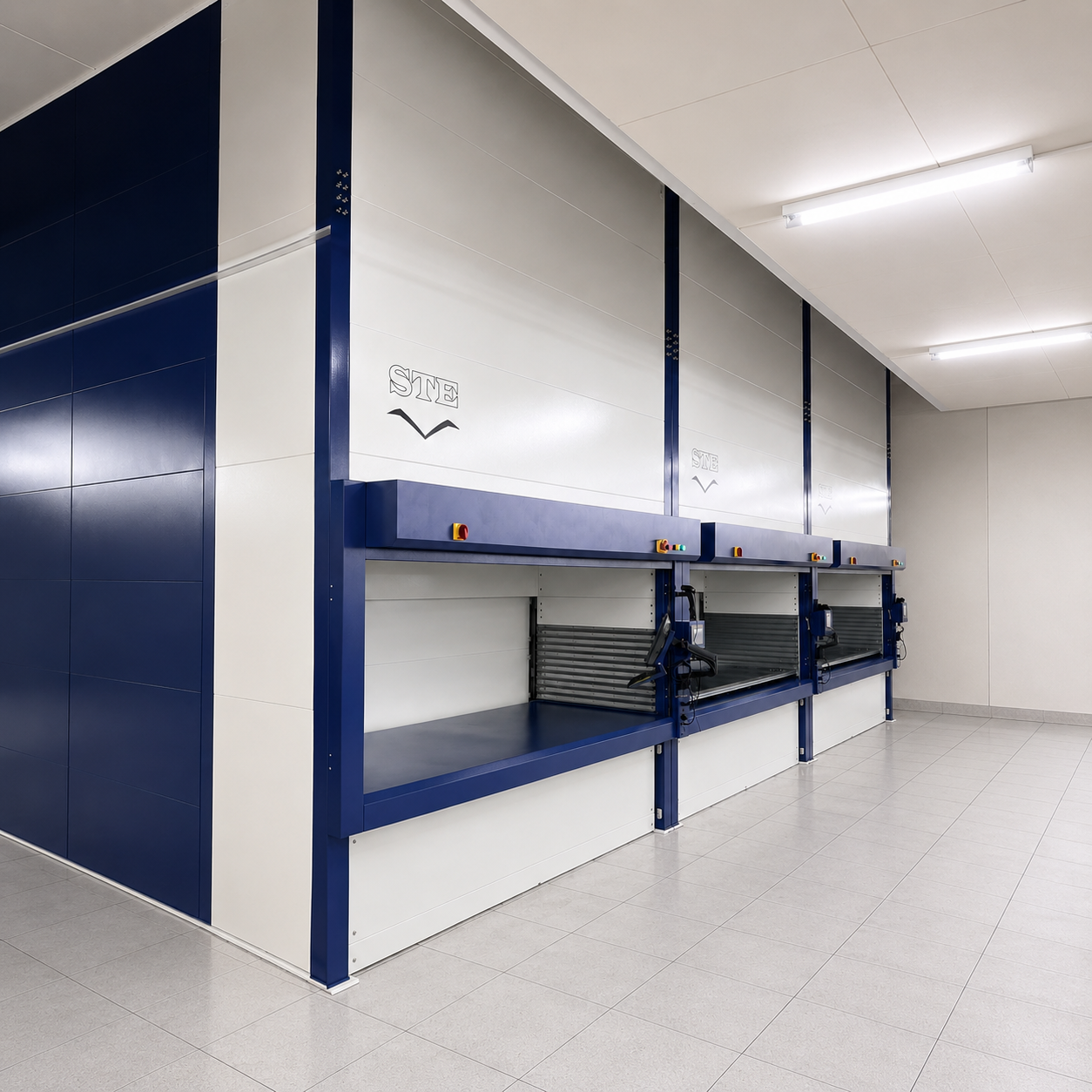
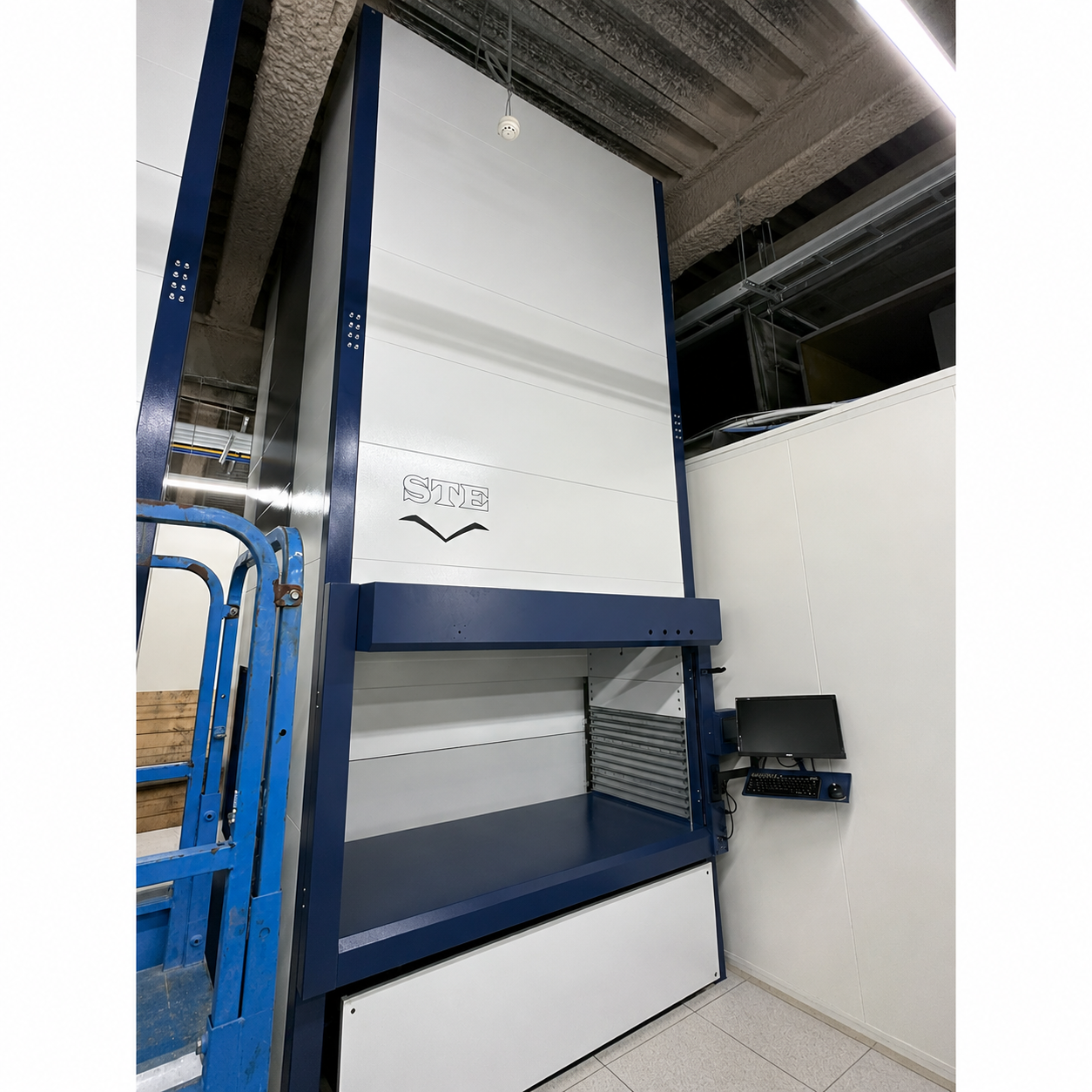
This project features the implementation of a vertical smart storage solution for the raw material warehouse of NEXCOM International Co., Ltd. The installation includes three large 5-meter automated storage units and two medium-sized 5-meter automated storage units, each with a single-load capacity of 300 kg. The system is designed for the centralized storage of industrial computer components and raw materials, as well as inbound/outbound management and cross-floor multi-unit integration.

Since its establishment in 1992, NEXCOM International Co., Ltd. has built a strong presence in the industrial computing sector. As production capacity expanded and the new Linkou facility was planned, the raw material warehouse began to face several challenges, including time-consuming material searches with conventional racking, limited remaining storage capacity, delayed inventory updates, and insufficient management visibility.

To address these issues, JY STE Technology developed a multi-unit vertical smart storage solution linking the first and second floors, based on the building’s 5- to 6-meter height conditions. This solution enables the customer to upgrade raw material management from a conventional manual approach to a more systematic, digitalized, and automated operation.

After implementation, industrial computer components and raw materials can be centrally managed through a multi-unit control system, improving storage and retrieval efficiency, space utilization, inventory accuracy, and material traceability. The system also preserves flexibility for future ERP/WMS integration and automation expansion, helping NEXCOM’s Linkou facility establish a more efficient and intelligent raw material warehouse management model.

Added to Inquiry list.
 
 
IPC RAW MATERIAL SMART STORAGE CASE STUDY

NEXCOM International Co., Ltd. | Raw Material Storage
3 Large 5 m / 300 kg Units + 2 Medium 5 m / 300 kg Units

This case study covers the introduction of vertical smart storage at NEXCOM International Co., Ltd. As production capacity increased, traditional metal shelving created challenges including time-consuming material retrieval, saturated warehouse space, and limited management transparency. Based on the 5-to-6-meter vertical space and the 1F and 2F raw material storage requirements at NEXCOM’s new Linkou plant, APEX deployed three large and two medium 5-meter vertical smart storage units, each with a maximum single-tray load of 300 kg. A multi-unit management system, automated inbound and outbound records, and systematic electronic material management support efficient intelligent logistics for industrial computer parts.

5 Units
Multi-Unit Vertical Smart Storage
5 m
Storage Height
300kg
Maximum Single-Tray Load
1F+2F
1F + 2F Storage Integration
PROJECT OVERVIEW

Project Overview

Since its founding in 1992, NEXCOM has been committed to being a trusted intelligent solutions partner for global clients and holds a significant position in the global intelligent industrial computer field. As production capacity continued to rise, NEXCOM faced time-consuming manual retrieval, warehouse space saturation, and insufficient management transparency. For the new Linkou plant, APEX configured three large 5-meter, 300 kg vertical smart storage units on 1F and two medium units of the same height and load capacity on 2F. The multi-unit management system unifies storage information across both floors.

Client
NEXCOM International Co., Ltd.
Application
Raw Material Storage
System Configuration
3 Large + 2 Medium Units
Load Capacity
300kg

1. Company Background: A Major Intelligent Industrial Computer Provider

Since its founding in 1992, NEXCOM has been committed to being a trusted intelligent solutions partner for global clients, holding a significant position in the global intelligent industrial computer (IPC) field.

As production capacity continued to rise, NEXCOM faced new challenges in managing industrial computer parts and raw materials. Materials stored on traditional metal shelves relied heavily on personnel familiarity with material codes, making verification, retrieval, and picking processes lengthy.

As warehouse space approached saturation, open floor storage could no longer make effective use of vertical height. NEXCOM therefore restarted its vertical smart storage evaluation during planning for the new Linkou plant to improve space utilization, material management transparency, and intelligent logistics efficiency.

2. Project Timeline: From Early Evaluation to the Linkou Deployment

01

Initial Contact in 2020

NEXCOM management noticed APEX’s smart storage system at an international automation exhibition and began further evaluation.

02

Multiple On-Site Planning Visits

The APEX team visited NEXCOM’s Sanmin Plant and Huaya Plant multiple times to conduct storage planning.

03

Linkou Project Restarted in 2025

When NEXCOM planned its new Linkou plant with optimal vertical space of 5 to 6 meters, both parties immediately restarted the vertical storage evaluation.

3. Deployment Solution: Multi-Unit Integration Across 1F and 2F

1F

3 Large Vertical Smart Storage Units


Deployed in the 1F raw material storage area, each unit is 5 meters high with a maximum single-tray load of 300 kg for industrial computer parts and raw materials.

2F

2 Medium Vertical Smart Storage Units

Deployed in the 2F raw material storage area using the same 5-meter height and 300 kg maximum single-tray load specification.

Multi-Unit

Unified Multi-Unit Management


Storage information from all units on 1F and 2F is vertically integrated into a unified management system.

BEFORE / AFTER

Key Differences Before and After Deployment

The operation was upgraded from traditional metal shelving, manual retrieval, and open-space management to five vertical smart storage units with unified information and automated inbound and outbound records.

Before | Traditional Shelving and Manual Material Management

Before deployment, industrial computer parts and raw materials were stored mainly on traditional metal shelves. Retrieval and verification depended heavily on personnel experience, while open floor storage could no longer support increasing capacity requirements.

  • Material retrieval depended heavily on familiarity with material codes and locations
  • Verification and picking processes were lengthy and labor-intensive
  • Open floor storage could not effectively use vertical height
  • Warehouse volume utilization was approaching its limit
  • Open-space storage was difficult to manage
  • Real-time, systematic automated inbound and outbound records were unavailable

After | Five Vertical Smart Storage Units

After deploying three large and two medium 5-meter vertical smart storage units, the 1F and 2F raw material storage areas are managed through a unified multi-unit system. Systematic electronic material management and automated inbound and outbound recording improve logistics efficiency and management transparency.

  • Three large vertical smart storage units on 1F
  • Two medium vertical smart storage units on 2F
  • Full utilization of the 5-meter vertical space
  • Maximum single-tray load of 300 kg
  • Unified storage information across 1F and 2F
  • Automated inbound and outbound records improve transparency
  • System-enabled picking reduces errors and material-loss risks

4. Management Challenges Before Automated Storage

01

Time-Consuming Manual Retrieval


Materials stored on traditional metal shelves relied heavily on personnel familiarity with material codes and locations, resulting in lengthy verification and picking processes.

02

Warehouse Space Near Saturation


Open floor storage could not effectively use the building’s vertical height, causing warehouse volume utilization to approach its limit.

03

Insufficient Management Transparency

Open-space storage was difficult to manage and lacked real-time, systematic automated inbound and outbound records, affecting traceability and inventory checks.

5. Solution: Five Integrated 5 m / 300 kg Vertical Smart Storage Units

APEX customized a multi-unit connected vertical smart storage solution based on the spatial characteristics of NEXCOM’s new Linkou plant and the properties of industrial computer raw materials. Three large units were deployed in the 1F raw material storage area and two medium units on 2F. The multi-unit management system vertically integrates storage information across both floors, enabling centralized control of storage, inbound and outbound operations, and inventory information.

3 Large 5 m / 300 kg Units

Deployed in the 1F raw material storage area to improve the storage efficiency of industrial computer parts and raw materials.

2 Medium 5 m / 300 kg Units

Deployed in the 2F raw material storage area to support material storage and management requirements on a separate floor.

Multi-Unit Management System

Integrates storage information across 1F and 2F to create a unified cross-floor, multi-unit management model.

Systematic Electronic Management

Automated inbound and outbound recording and systematic electronic material management improve operational visibility and control.

6. Why the Project Was Successfully Restarted

01

Long-Term Evaluation and Communication


APEX and NEXCOM maintained close contact after the initial project was postponed because the existing facility did not provide sufficient ceiling height.

02

New Plant with Suitable Vertical Space


The new Linkou plant provided optimal vertical space of 5 to 6 meters, enabling the vertical storage evaluation to restart in 2025.

03

Customized Multi-Unit Configuration


The solution was tailored to NEXCOM’s two-floor raw material storage layout and the properties of industrial computer materials.

04

Unified Cross-Floor Management


All storage information across 1F and 2F is integrated through a multi-unit management system for unified control.

7. Results After Introducing Smart Storage

Higher Inbound and Outbound Efficiency

Smart storage reduces the time personnel spend locating materials and processing inbound and outbound operations, making work more time-efficient and labor-saving.

Maximized Space Utilization

High-altitude space that could not be used effectively with traditional metal shelving is fully activated, improving storage efficiency and warehouse volume utilization.

Systematic Material Management

The inbound and outbound status of every industrial computer part is automatically recorded by the system, improving management transparency.

Reduced Picking Errors and Material-Loss Risks

The system-enabled picking process reduces error rates and material-loss risks associated with traditional manual picking.

More Efficient Inventory Checks

Systematic inbound and outbound records make periodic inventory checks easier and more efficient.

Enhanced Corporate Image

Modernized vertical storage operations demonstrate NEXCOM’s Industry 4.0 supply chain management capabilities to international clients and audit teams, strengthening brand image and client trust.

 
MULTI-MACHINE SMART STORAGE VALUE

8. Five Vertical Smart Storage Units Create Unified Intelligent Logistics

NEXCOM’s new Linkou plant deployed five large and medium vertical smart storage units and integrated storage information across 1F and 2F through a multi-unit management system. For industrial computer parts management, this represents more than individual equipment installation. It upgrades the raw material storage operation from traditional shelving, manual retrieval, and open-space management to a traceable, systematic, cross-floor intelligent logistics structure.

Five Units

Three large units and two medium units support raw material storage requirements across two floors.

Unified Management

Storage information from 1F and 2F is vertically integrated for unified management.

Automated Records

Systematic electronic management and automated inbound and outbound records improve visibility and control.

BENEFITS

Summary of Deployment Benefits

Maximized Storage Capacity

The 5-meter large and medium units make full use of the new plant’s vertical space and improve warehouse volume utilization.

Higher Operating Efficiency

Systematic inbound and outbound processes reduce retrieval and picking time and improve logistics efficiency.

Greater Management Transparency

Automated inbound and outbound records and systematic material information make storage status clear and traceable.

Stronger Brand Image

Modern intelligent storage operations demonstrate advanced Industry 4.0 supply chain management capabilities and strengthen client trust.

Applicable Industries and Storage Scenarios

Industrial Computer Industry Raw Material Storage Large 5 m Vertical Storage Medium 5 m Vertical Storage 300 kg Single-Tray Load Multi-Unit Management System 1F / 2F Storage Integration Systematic Electronic Material Management
JY STE SMART STORAGE SOLUTION

Planning a Multi-Unit Intelligent Raw Material Storage System?

APEX provides vertical automated storage and multi-unit intelligent logistics solutions based on material dimensions, load requirements, facility height, floor configuration, and management requirements.

Contact Apex Equipment | +886-4-2384-5678
TOP